

HVAC & Air Conditioning
Cooling is the biggest electricity line in most inland LA homes. A right-sized high-efficiency system cuts it, and we size it to the house rather than to the old label.
Learn more
A floor fails from underneath. Hollow-sounding laminate, tile that cracks along one line, planks that separate at the seams in the second summer, nearly all of it traces back to a subfloor that was out of flat, a slab that was never moisture tested, or an expansion gap that was not left. The material you choose matters far less than the two days of preparation before it goes down. And since this site is about saving you money, here is the honest version on flooring specifically: it is the weakest energy measure on our list, and we are not going to invent a story about it.
The honest one. Flooring is a comfort and durability purchase. There are two small energy effects and we are not going to pretend they are large.
Air sealing matters more than the floor itself. Gaps at the perimeter, around pipe penetrations and at the sill are worth closing while the floor is up, and ENERGY STAR puts air sealing plus insulation at about 14% of heating and cooling energy in our climate zone.
Over a vented crawlspace or an unconditioned garage, underfloor insulation installed while the floor is open is real and cheap to do at that moment. Over a slab, which is most of the Valley, it does not apply.
Porcelain tile on a slab stays cooler underfoot than wood or vinyl, which is a comfort benefit through a Valley summer rather than a measurable bill reduction.
If someone quotes you an underlayment with an R-value as an energy upgrade, check the number. Typical acoustic underlayment is around R-1, which is a rounding error next to an attic at R-49. It is genuinely good for sound between storeys. It is not insulation.
Works best with: Kitchen Remodeling Bathroom Remodeling
Savings depend on your house, your equipment and how you use it. We will not quote you a guaranteed number, and neither should anyone else. See the rebates currently available
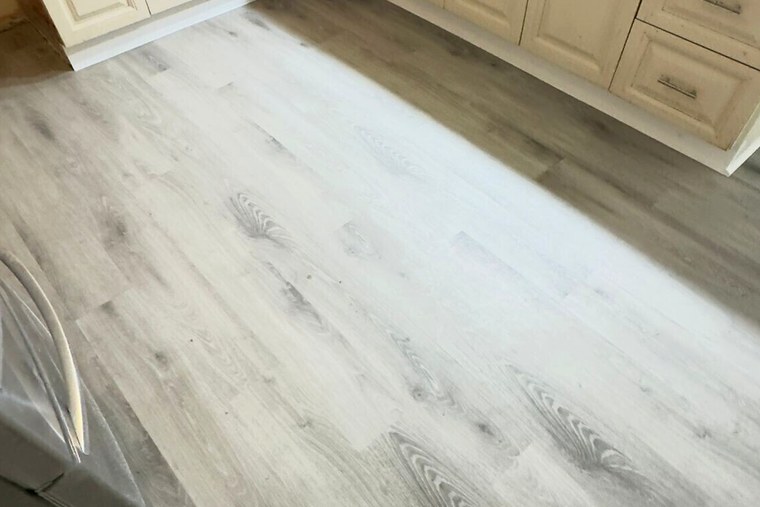
Solid hardwood refinishes beautifully and belongs in dry living areas. Engineered wood gives the same surface with far more dimensional stability, which matters over a slab. Luxury vinyl plank is genuinely waterproof and is the right answer for kitchens, baths, laundries and homes with dogs, and modern wear layers look nothing like the vinyl people remember. Porcelain tile is the most durable and the coolest underfoot, which is an advantage for most of the Los Angeles year. We will tell you when the cheaper material is the better one for the room.
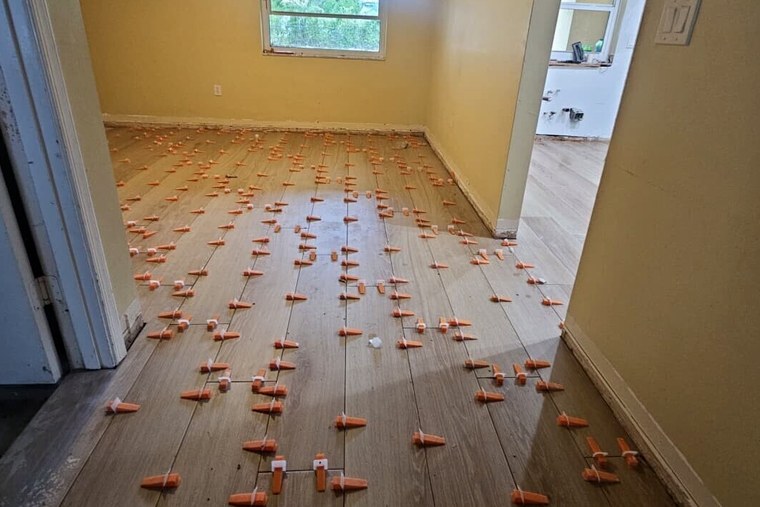
We flatten the subfloor to the manufacturer's tolerance, grinding high spots and filling low ones, because that tolerance is also the warranty condition. On slab-on-grade homes, which is most of the Valley, we moisture test before anything is glued or floated and use the correct underlayment or barrier for the reading we get. We leave the expansion gap the manufacturer specifies and cover it with base or shoe rather than caulking the floor to the wall.
This is the part that does have a small energy payoff, and it costs almost nothing at the right moment. Seal the perimeter gap and any pipe or duct penetrations. Insulate underfloor where the space below is a vented crawlspace or an unconditioned garage. Check for and report duct leakage if ducts run under the floor. None of it will transform your bill, and all of it is cheap now and expensive later.
Barely, and we would rather say so. The air sealing and any underfloor insulation we do while the floor is up are worth having, but flooring is a comfort and durability purchase. Put your efficiency budget in the attic and the HVAC system first.
Luxury vinyl plank with a thick wear layer, or porcelain tile. Both are waterproof and neither is bothered by claws. Engineered wood with a hardened finish is the next step up in look and cost.
Sometimes over tile, if it is sound, bonded and flat, but it raises the finished height, which affects doors and appliances. Over a slab we moisture test first. We will tell you which approach actually saves money once demolition is priced in.
Cooling is the biggest electricity line in most inland LA homes. A right-sized high-efficiency system cuts it, and we size it to the house rather than to the old label.
Learn moreDollar for dollar, usually the best money you can spend on a Los Angeles house. Seal first, then insulate, and LADWP pays $0.50 a square foot.
Learn moreA roof in Los Angeles is a heat decision as much as a water one. A reflective surface runs far cooler, and LADWP pays a rebate on it.
Learn more