

Kitchen Remodeling
The one time the walls are open. Induction, LED and efficient appliances cost almost nothing extra now and are expensive to retrofit later.
Learn more
Artificial grass removes an irrigated lawn from your water bill completely and permanently, and in a city where outdoor use is the largest slice of household water, that is a real and immediate saving. It is also the right answer for the strips and side yards where grass was never going to survive anyway. What we will not do is pretend it is an all-purpose environmental upgrade, because a synthetic lawn gets considerably hotter than a living one and that has consequences for how and where you use it.
A permanent end to lawn irrigation, which in Los Angeles is the biggest single line of outdoor water use.
Outdoor use is more than 30% of household water and up to 60% in arid regions, and as much as half of it is lost to inefficient irrigation. Removing the lawn removes that line entirely.
Published savings from replacing a lawn span 11 to 76 gallons per square foot per year, depending mostly on how heavily it was watered before.
No mowing means no petrol mower, and no fertiliser or weed treatment running off into the storm drain.
Two things you should hear before you buy. Synthetic turf runs 35 to 55°F hotter than natural grass in full sun, with surface temperatures recorded as high as 200°F on a 98°F day, so it is not a heat-island fix and we will never sell it to you as one. And it does not qualify for the LADWP turf replacement rebate, which requires live planting. If the rebate matters more than the maintenance, drought-tolerant planting is the better route and we do that too.
Works best with: Landscape & Hardscape
Savings depend on your house, your equipment and how you use it. We will not quote you a guaranteed number, and neither should anyone else. See the rebates currently available
Front lawns and parkways under water restriction, side yards and shaded strips where grass never establishes, dog runs, rooftop and balcony spaces, pool surrounds, and putting greens. Anywhere you are irrigating a lawn you barely use, the water bill alone builds the case.
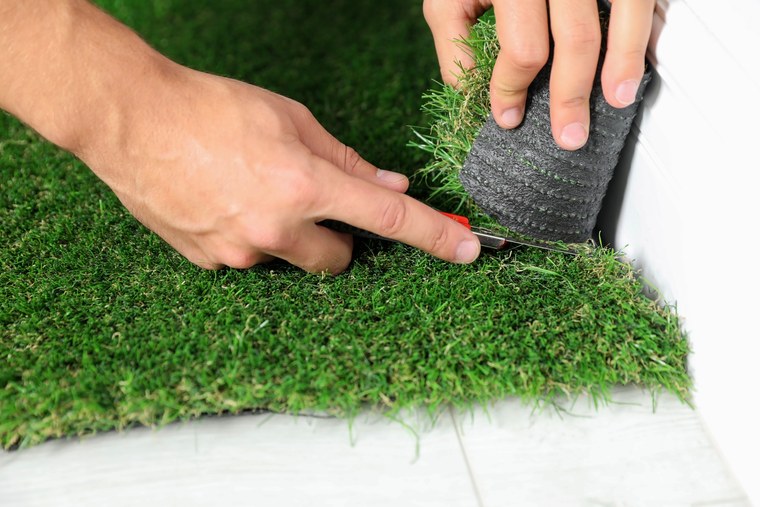
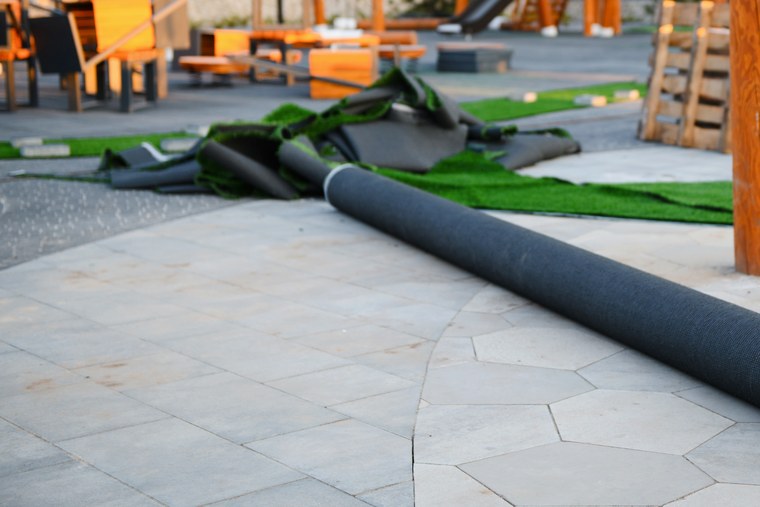
Excavation and a compacted aggregate base, weed barrier, correct drainage so the base does not hold water, seams glued and hidden rather than stitched down the middle of a lawn, edges secured, and infill brushed in to hold the blades upright. A turf laid straight onto soil looks fine for one summer and then ripples, holds water and flattens.
Pile height, blade shape, face weight and backing permeability all matter more than the price per square foot. For dog runs we specify a permeable backing and an antimicrobial infill. For full-sun areas we will talk to you about lighter blade colours and about shade, because that is the honest way to manage the heat rather than pretending it is not there.
In full sun, yes. Research has recorded synthetic turf running 35 to 55°F above natural grass, and much higher on extreme days. It is fine in shade and in areas you walk on rather than lie on, and we will tell you honestly if your yard is the wrong candidate.
No. The LADWP and Metropolitan turf replacement rebates require live drought-tolerant planting and specifically exclude synthetic turf. If the rebate is the point, we will design you a planted scheme instead.
A properly based and drained installation runs fifteen to twenty years. One laid on soil without drainage starts to look wrong in two or three, which is why we quote the base rather than just the turf.
The one time the walls are open. Induction, LED and efficient appliances cost almost nothing extra now and are expensive to retrofit later.
Learn moreBuilt to stay dry, and specified so the water you save is also hot water you never paid to heat. Waterproofing you can see photographed before it is covered.
Learn moreStraight answer: flooring is not an energy upgrade. What it can do is close the gaps, insulate over a crawlspace, and hold cool underfoot.
Learn more